
Health & Safety and Security Risk Assessment Newsletter #10
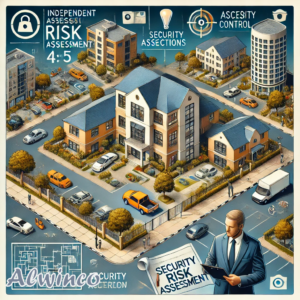
We recently conducted an independent security risk assessment for a corporate company in Cape Town, demonstrating that security and health and safety are two separate pillars. Health and safety address hazards and accidental risks, measured in probability, while security focuses on threats and crime, measured in opportunity. This distinction is so important that we decided to dedicate an entire newsletter to it.
If you would like to learn more about our security risk assessments or have specific topics you would like us to cover, please email your suggestions to andre@alwinco.co.za. We will create and publish articles tailored to your interests on our website.
Click here to read the entire newsletter: Alwinco Newsletter 0925
Article 1: Why Health and Safety Without Security Is a Dangerous Illusion
Most companies in South Africa believe they are compliant with workplace safety because they meet health and safety requirements such as fire drills, first aid kits, and protective equipment. However, security is often overlooked. After more than 20 years of conducting Security Risk Assessments, it has become clear that organizations frequently assign health, safety, and security to one person. While this may seem efficient, health and safety obligations consume most of that person’s time, leaving security neglected until after an incident occurs.
Health and safety and security are two separate pillars. Health and safety address hazards and accidental risks, measured in probability, while security deals with deliberate threats and crime, measured in opportunity. Both require independent, objective assessments. Internal reviews often miss critical risks, much like a student grading their own exam.
Conflicts arise when one person tries to manage both areas.
For example, fire safety standards may require an easily opened door, while security demands reinforcement against break-ins. When priorities clash, balance is rarely achieved, and security

typically suffers. The result is a reactive approach, where assessments are often done only after a crime. These are known as B-Assessments, which examine failures and negligence after an incident, rather than A-Assessments, which proactively prevent risks.
Under South Africa’s Occupational Health and Safety Act (OHSA), employers must provide a workplace that is “safe and without risk.” Crime qualifies as a hazard under this law. Failing to address it is not just poor planning; it can amount to gross negligence, leaving employers legally accountable for harm to employees, visitors, or clients.
Security is not optional. A proper Security Risk Assessment is as essential as a fire risk plan. It examines vulnerabilities beyond cameras and guards, identifying weaknesses criminals might exploit and offering practical solutions. Most organizations, likely 99%, are noncompliant with OHSA when crime is considered a hazard.
Health, safety, and security must stand as equal pillars.
Neglecting either undermines workplace protection, damages reputations,
and exposes businesses to legal consequences. To safeguard lives and ensure compliance, organizations must treat security with the same seriousness as health and safety, using independent, professional assessments to remove blind spots.
Article 2: The Hidden Dangers: A Missed Opportunity to Prevent Crime
In South Africa, crime often goes unreported because people with vital information do not know whom to trust or how to share it. Informers frequently stay silent, fearing that police or security guards will ignore them. Reporting suspicious activity often feels like “shouting into a void,” as messages through generic emails or guards rarely reach the right decision-makers.
Examples include failing to alert a company about a delivery truck acting suspiciously in Johannesburg and being unable to report urgent basement activity in Cape Town due to blocked communication channels. These incidents reveal how broken reporting systems discourage people from coming forward.
Hotlines should bridge this gap.
But many are ineffective or nonexistent. A proper Security Risk Assessment should check if an organization has an independent, functional hotline or informer network to deliver critical tips promptly.
Real security is not just about guards and cameras. It depends on creating a trusted system where people feel safe sharing information and where someone acts immediately. Without this, South Africa’s estates, businesses, and institutions remain dangerously exposed.
Article 3: Why Does Crime Thrive in South Africa?
Crime in South Africa persists not due to lack of technology but because organizations skip the essential first step: proper security risk assessments. Instead of identifying real risks, many decision makers rush to buy hardware or control the process themselves, undermining its purpose. Inexperienced senior executives often override security planning, demand shortcuts, prioritize cost, and treat assessments as formalities instead of foundations.
A real Security Risk Assessment is a detailed investigation of all security layers, not a quick checklist or a line item in an RFQ.
Yet many businesses still rely on outdated systems while criminals continually study vulnerabilities and adapt to new technology. Organizations frequently ignore internal threats, such as poor management or malicious insiders, further weakening protection.
This interference has serious consequences. People dismiss expert recommendations, mismanage budgets, and cause projects to fail, sometimes with devastating results. Crime thrives because people make security decisions without understanding or respecting the processes designed to address risk. True security starts with education, identifying threats, and following an expert-led process to close vulnerabilities before criminals exploit them.
Corporate risk assessment AI Security risk assessment AI Risk assessment AI
Covering all of South Africa, Alwinco provides Security Risk Assessments, particularly in Gauteng (Menlyn, Braamfontein, Kyalami, Fourways, and Hatfield), Bloemfontein, Bluff, and Hout Bay.
R60 Billion Spent Annually on Security and We Are Still Losing the War Against Crime