

What Does Independence Really Mean?
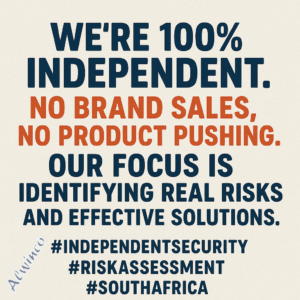
Independence in security risk assessments means having no affiliations with security companies, manufacturers, or service providers. At Alwinco, we are separate from the industry players who sell security products, software, or hardware. We don’t provide security services, nor do we conduct assessments on behalf of security providers. Why? Because if we did, we wouldn’t be independent anymore. Our recommendations would be influenced by the business interests of those companies, rather than by what truly reduces risk. When we conduct an assessment, we work directly with the client. This part matters. If a security provider hires us to assess their client’s property, we must follow their instructions, which changes everything. Instead of focusing solely on risk reduction, the assessment could become about aligning with what benefits the security company. That’s not independence; that’s a conflict of interest. # Security Risk Assessment Hatfield
The Legal and Ethical Problems with Third-Party Assessments
Beyond the issue of bias, there are also legal complications when security providers hire third-party assessors. According to South African law, a formal instruction letter from the client is required when a security provider commissions an external security risk assessment. However, in practice, many assessments happen informally, without clear guidelines on who owns the final report and who has access to its sensitive findings.
Case study –
Let’s consider a real-world scenario: ABC Security hires an outside assessor, John (called a ‘third-party assessment’), to assess a property security risk. The property owner may not even know John is involved with a security provider. Highly sensitive security details about their property are now being shared with a security provider. Who controls the final report? Who decides what information the property owner receives? In an independent assessment, the client retains full control. But when a security provider is in charge, transparency often takes a backseat.
In the security risk assessment report, we explain why clients must not share the security risk assessment report with the security provider in detail.
The Money Factor: Who’s Really Paying for the Assessment?
Money influences security risk assessments more than most clients realize. When a security provider commissions an assessor, the cost of the assessment may seem lower than hiring an
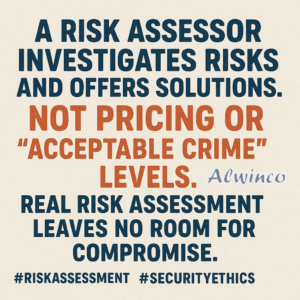
independent risk assessor. But why? Because the hired assessor knows they’ll be compensated not just by the client but also by the security provider or installer. They offer a lower price for the assessment to secure the job, knowing they’ll receive additional payment later from the company that hired them. This creates a dangerous incentive. Instead of prioritizing the best security solutions for the client, the assessor may tailor recommendations to align with the interests of the security provider. If the company sells CCTV systems, the report might emphasize surveillance over other necessary measures. If they provide armed response services, the assessment might downplay physical barriers in favour of increased patrols. The result? A security plan that serves business profits rather than genuine protection.
The Conflict of Interest: Who Benefits?
Security providers frequently approach us, asking us to conduct assessments on their behalf. They asked us to bid low on the security risk assessment in the RFQ and secure the deal. The problem? Those assessors are now working to satisfy the security provider, not the client. Their findings and recommendations are subtly influenced, sometimes even directly shaped, by the interests of the company paying them. At Alwinco, we refuse to engage in this practice. Our role is to provide an honest, independent assessment of security risks, free from external influence. Anything less is a compromise, and in the world of security, compromises lead to vulnerabilities.
Why Independent Assessments Are the Only Real Assessments

The core issue here is independence, or the lack of it. A genuine security risk assessment should be conducted without hidden influences, ensuring that recommendations are based purely on real risks, not financial incentives. Otherwise, clients may discover themselves investing in security measures that benefit a company’s bottom line rather than their actual safety.
For over 20 years, we’ve proven that true security assessments can only come from independent assessors. We don’t just assess security from the inside; we analyze it from the outside, the way a criminal would. That’s what sets our assessments apart. We stand alone because it’s the only way to give you the unfiltered truth about your security risks.
If you’re serious about securing your property, you need an assessment that prioritizes your safety, not someone else’s profits.
Written by Andre Mundell. # Independence is key. # Security Risk Assessment Hatfield
We provide security risk assessments for customers in Centurion, Bloemfontein, Durban North, Pretoria East, Constantia, and other Gauteng cities. The security risk assessments apply to residences, businesses, industrial estates, farms, and other sorts of properties.