
Imagine arriving at work on a Monday morning.
CCTV Surveillance and POPIA – The security guard greets you with a smile as the boom gate lifts. A camera quietly records your vehicle entering the property. Another captures your face as you walk through reception. Your fingerprint opens a secure door. Somewhere in the parking area, an automatic number plate recognition (ANPR) camera notes your registration number.
You barely notice any of it. After all, this has become part of everyday life.
Now imagine that, instead of asking whether all this technology makes the building safer, someone asks a different question.
“Is every one of these cameras being used legally?”
For many organisations across South Africa, that question may soon become one of the most important they have to answer.
The Information Regulator has published a Draft Code of Conduct for CCTV Surveillance under the Protection of Personal Information Act (POPIA). While it is still in draft form, it gives a very clear picture of where South Africa is heading. Businesses, residential estates, shopping centres, schools, hospitals, factories, office parks and many other organisations that use surveillance technology should not wait until the final version becomes law before preparing.
Many people think of CCTV as nothing more than a camera attached to a wall.
In reality, every camera is collecting personal information. If a person can be identified from the footage, even by their clothing, their vehicle or the time they entered a building, that recording may fall under POPIA. The camera is no longer just a security device. It has become a system that processes personal information.
For years, organisations have focused mainly on installing cameras. The discussion often centred around questions such as, “Do we have enough cameras?” or “Can we see every corner of the property?”
The new approach asks something quite different.
“Do we really need this camera? Is it pointing in the right direction? How long are we keeping the recordings? Who is allowed to watch them? Can we prove that we are protecting the information we have collected?”
These questions may sound simple, but they reach much further than many people realise.
Picture a shopping centre where dozens of cameras quietly follow thousands of shoppers every day. Most visitors assume the recordings are there to protect them from crime. They may never stop to wonder how long organisations keep those recordings, who can access them, whether anyone makes copies, or how organisations respond when someone requests footage that contains their personal information. Under the proposed rules, organisations can no longer ignore these questions.
The same is true for residential estates.
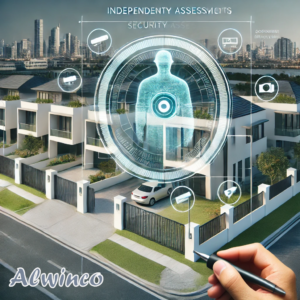
Modern estates have become small cities, filled with CCTV systems, facial recognition, biometric access control, visitor management systems and ANPR cameras. These technologies can provide excellent security when they are properly planned and managed. However, they also collect enormous amounts of personal information. The proposed Code makes it clear that surveillance must have a lawful purpose, be proportionate to the risk, and not collect more information than is reasonably necessary.
Simply because technology allows something to be done does not automatically mean it should be done.
It is also important to understand that this is not always the fault of the organisation. In many cases, the software itself encourages the collection of more information than is actually needed. Imagine arriving at a residential estate to visit a friend. The security officer asks for your name, surname, identity number, cell phone number, vehicle registration, address, the person you are visiting and sometimes even more. You may wonder why all of this is necessary, but the officer often has little choice. The software will not process the visitor until the security officer completes every compulsory field.
This is where software developers have an important role to play.
As South Africa’s privacy laws continue to evolve, software developers should design visitor management systems, access control platforms, and other security software around the principles of POPIA.
Organisations should decide what information they genuinely need for their level of risk instead of collecting excessive personal information simply because their software requires it.
Good security does not mean collecting as much information as possible.
It means collecting only the information that is necessary for a lawful purpose, protecting it responsibly, and managing it correctly throughout its entire life cycle. Once organisations collect personal information, they must decide how they will store it, who may access it, and when they will securely delete it.
One of the biggest changes concerns the management of CCTV footage itself. The Draft Code recommends that organisations do not keep routine recordings indefinitely. Instead, organisations should retain footage only for as long as they have a legitimate need. They should routinely overwrite recordings within a relatively short period unless they need the footage for an investigation or legal proceedings.
Organisations will also be expected to:
Organisations should control who may access recordings, keep records of everyone who accesses them, protect footage from unauthorised disclosure, and securely delete recordings when they no longer need them.

These proposals reflect the broader principles already found in POPIA, including accountability, purpose limitation, minimality and security safeguards.
For many organisations, this could require more than simply changing a setting on a recorder. Organisations may need to review their policies, define staff responsibilities, manage access permissions, update maintenance procedures, and improve the way they manage surveillance.
It would be easy to read all of this and feel a sense of panic. Thoughts of rewriting policies, reviewing cameras, updating procedures and checking compliance may seem overwhelming. Yet, when you step back and look at the bigger picture, you realise that very little of this is truly new. These are the kinds of practices that should always have formed part of a well-managed security programme. The proposed rules are not asking organisations to reinvent security. They are asking them to manage it responsibly, transparently and with respect for the personal information entrusted to them.
There is another important lesson hidden within these proposed changes.
Many organisations assume that because they have invested in modern security technology, they are automatically compliant. Unfortunately, technology cannot make legal decisions. A camera does not know whether it is recording part of a neighbour’s property. A biometric reader does not know whether collecting fingerprints is truly necessary. An ANPR system cannot decide how long it should store vehicle information. People who understand both security and the law must make those decisions.
This is where many organisations may discover that their greatest risk is not the equipment they have installed, but the questions they never thought to ask.
The purpose of these proposed rules is not to stop organisations from protecting people.
Security remains essential. Cameras continue to deter criminals, assist investigations and provide valuable evidence. The challenge is finding the correct balance between protecting people from crime and protecting their right to privacy. Good security and good privacy are not enemies. When designed correctly, they work together.
This is why every organisation should begin preparing now, even before the Draft Code becomes enforceable. Waiting until the final requirements arrive may leave businesses rushing to correct problems that could have been identified months or even years earlier.
One of the most practical ways to prepare is by reviewing your existing Security Risk Assessment.
An independent Security Risk Assessment is not simply a checklist of cameras and alarms. It is a systematic examination of how people, procedures, technology and management work together to reduce risk while ensuring that security measures remain appropriate, lawful and effective.
An independent assessor has no interest in selling equipment or promoting a particular solution. Their role is to identify risks objectively, explain why they exist, and recommend the most suitable course of action based on the organisation’s actual needs.
If your organisation already has an independent Security Risk Assessment, now is an excellent time to take it off the shelf and read it again.
Ask whether every recommendation has been implemented. Confirm that your surveillance systems are being managed as intended. Review whether policies, procedures and staff training still reflect the way your organisation operates today. A report that gathers dust cannot protect anyone.
If you do not have an independent Security Risk Assessment, now is the right time to consider obtaining one. The proposed surveillance requirements remind us that effective security is never just about installing more technology. It is about understanding risk before making decisions, ensuring that every measure serves a clear purpose, and creating systems that remain effective, lawful and sustainable as legislation evolves.
As South Africa strengthens its regulation of surveillance, organisations have a valuable opportunity to prepare. Time to prepare. Time to review existing practices.
Time to correct weaknesses before they become compliance problems. Those who use this opportunity wisely are likely to find that when the new rules finally arrive, they are not facing a crisis. Instead, they will simply be confirming that they have been doing the right things all along.
References
Daily Investor. New surveillance laws for estates and shopping malls in South Africa. https://dailyinvestor.com/south-africa/144356/new-surveillance-laws-for-estates-and-shopping-malls-in-south-africa/
Information Regulator (South Africa). Draft Code of Conduct for CCTV Surveillance under the Protection of Personal Information Act (POPIA). https://inforegulator.org.za/
Protection of Personal Information Act 4 of 2013 (POPIA). https://www.justice.gov.za/inforeg/
# CCTV Surveillance and POPIA